
In-Depth Comparison Between Oxy-Fuel Composite Cutting and Laser Cutting Process Selection and Development Trends in Heavy Plate Metal Processing
In the modern metal fabrication industry, the selection of cutting technology directly impacts production efficiency, processing quality, and operational costs. As manufacturing continues to evolve toward higher precision, greater efficiency, and intelligent automation, laser cutting and oxy-fuel composite cutting have become two mainstream technologies widely applied in heavy plate processing across various industrial sectors.
As a professional manufacturer of metal processing laser equipment, Xianming Laser continues to focus on the development needs of thick plate fabrication and constantly optimizes its oxy-fuel composite cutting and laser cutting solutions. The company provides efficient and stable processing support for industries such as steel structure manufacturing, construction machinery, shipbuilding, heavy equipment fabrication, and large-scale metal processing.
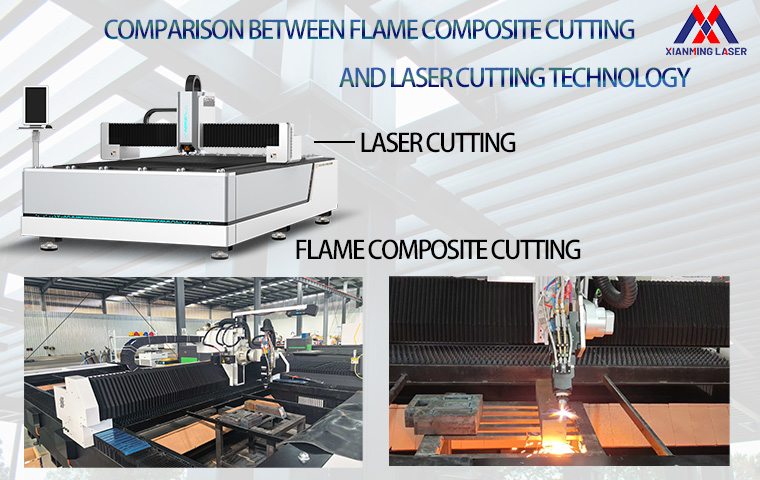
Core Advantages of Oxy-Fuel Composite Cutting Technology
In medium-thick and ultra-thick plate processing applications, oxy-fuel composite cutting still maintains strong market competitiveness. Particularly in heavy carbon steel processing, this technology demonstrates outstanding comprehensive processing capability and cost-effectiveness.
More Suitable for Ultra-Thick Plate Processing
Compared with conventional laser cutting processes, oxy-fuel composite cutting offers greater stability and stronger penetration capability when processing ultra-thick steel plates. For thick carbon steel, medium-heavy steel plates, and other heavy-duty metal materials, the process can maintain stable cutting performance continuously, making it highly suitable for mass production requirements in heavy industries.
In sectors such as large steel structure fabrication, bridge engineering, mining machinery manufacturing, and shipbuilding, oxy-fuel composite cutting adapts effectively to continuous heavy plate processing applications and demonstrates excellent industrial practicality.
Lower Overall Processing Costs
In heavy plate fabrication, manufacturers pay close attention to long-term operational costs and production investment. Oxy-fuel composite cutting provides clear advantages in terms of gas utilization efficiency, energy consumption, and equipment operating costs.
Especially when processing high-thickness carbon steel, high-power laser cutting systems require significant demands on auxiliary gases, power output, and precise parameter matching. In contrast, oxy-fuel composite cutting can achieve stable production at a lower unit processing cost, making it more suitable for long-term, large-volume thick plate manufacturing.
For enterprises seeking optimized overall production efficiency and cost control, oxy-fuel composite cutting offers significant economic value.
More Stable Cutting Quality for Thick Plates
In ultra-thick plate applications, cutting surface flatness, verticality, and slag control directly affect subsequent welding and assembly efficiency.
Oxy-fuel composite cutting can achieve more uniform and stable cutting surfaces during thick plate processing. It also performs exceptionally well in controlling the heat-affected zone, reducing slag adhesion, and maintaining cutting consistency. Particularly when processing high-thickness steel plates, the overall cutting edge quality often exceeds that of conventional laser cutting methods.
Therefore, in industrial applications where stable heavy plate processing is critical, oxy-fuel composite cutting remains one of the preferred manufacturing solutions.
Key Features of Laser Cutting Technology
Laser cutting is widely recognized for its high precision, fast processing speed, and advanced automation capabilities. It plays an important role in thin and medium-thin sheet metal fabrication.
Its primary advantages include: High cutting precisionNarrow kerf width with excellent edge qualitySmall heat-affected zoneFast cutting speedCapability for complex shape processingHigh automation and intelligent manufacturing compatibility
In the processing of stainless steel, aluminum, thin carbon steel, and precision metal components, laser cutting delivers highly refined machining results. Therefore, it is extensively applied in sheet metal fabrication, precision manufacturing, household appliance production, automotive components, and advertising industries.
However, as material thickness increases, laser cutting systems require significantly higher power output, stricter auxiliary gas purity, and more demanding process parameter control. Meanwhile, processing efficiency, operational costs, and maintenance expenses also increase when cutting ultra-thick plates.
As a result, manufacturers must comprehensively evaluate production efficiency, equipment investment, and long-term operating costs when selecting cutting technologies for heavy plate applications.
Future Development Trend: Integration of Oxy-Fuel Composite Cutting and Laser Cutting
With the rapid advancement of intelligent manufacturing technologies, a single cutting process can no longer fully satisfy the increasingly complex demands of industrial production. The integration of oxy-fuel composite cutting and fiber laser cutting is becoming an important development direction in the heavy plate processing industry.
Through continuous improvements in intelligent control systems, automated motion control technologies, and composite processing techniques, integrated cutting equipment can combine the high precision advantages of laser cutting with the superior thick plate processing capability of oxy-fuel cutting. This further enhances overall production efficiency and processing quality.
As an important trend in the metal fabrication industry, composite cutting technology is helping manufacturers achieve more efficient, stable, and intelligent production operations.
Xianming Laser Continues to Promote Thick Plate Processing Technology Upgrades
As a professional provider of metal laser processing equipment solutions, Xianming Laser Official Website continues to focus on the thick plate processing industry by continuously optimizing laser cutting systems, oxy-fuel composite metal laser cutting equipment, and intelligent automated processing technologies.
In the future, Xianming Laser will continue to develop toward higher efficiency, greater stability, and smarter manufacturing solutions, providing global customers with more professional and reliable metal processing equipment and integrated industrial solutions while supporting the continuous advancement of modern manufacturing industries.
