
Industrial Safety Guide: Operating a Class 4 Fiber Laser Cleaning Machine Safely
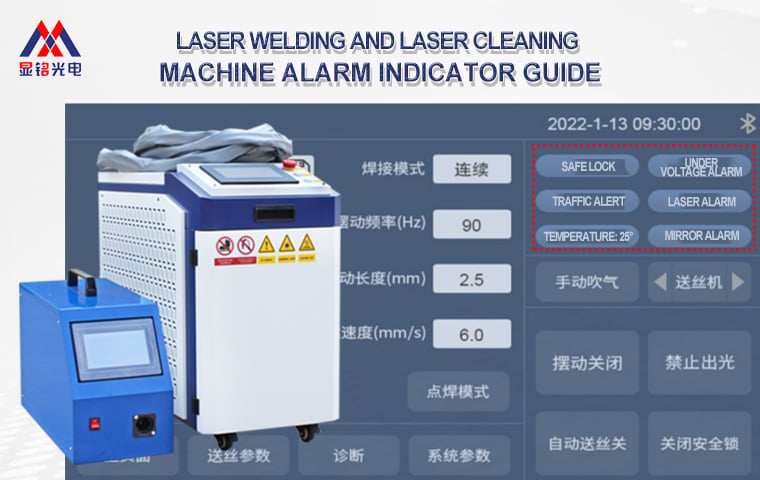
Laser cleaning removes rust, paint, and oxide without chemicals or abrasive media. It’s cleaner than acid pickling and less dusty than sandblasting. But it’s not risk-free. A fiber laser cleaning machine for rust removal is usually a Class 4 laser. The beam is invisible at 1064nm, and a reflection off polished metal can still hurt eyes or start a fire.
Main risks
The beam itself is the biggest hazard. At 1064nm, the light is invisible—your blink reflex won’t protect you. Direct exposure can damage the retina. A specular reflection off stainless steel or aluminum can stay dangerous up to 80 meters. That means the whole bay is in the risk zone, not just the operator.
Fume and dust are the second risk. When the laser hits heavy rust, paint, or zinc coating, it creates fine particles. Without source capture, operators can inhale pulmonary irritants.
Fire is third. Dry rust dust, paint residue, and oil-soaked rags can ignite if the beam hits them. Damaged cables or overheating add another ignition source.
PPE that matches the laser
Laser safety glasses for 1064nm: Rated OD5 minimum. For close-up work or possible specular reflection, use OD6+. VLT should be 20–40% so the operator can still see the workpiece.
Heat-resistant gloves: Protect from hot surfaces and stray reflections.
Flame-retardant clothing: No loose sleeves or synthetic fabric that can melt.
Dust mask: P2/P3 respirator, used with the extraction system.
Workshop setup
Warning signs around the zone. Restrict access to trained operators.
Fume extraction: For every 1kW of laser power, plan 150–300 CFM airflow. Use a dedicated industrial fume extractor, not a shop vacuum.
Fire safety: CO₂ or dry powder extinguisher within reach. Remove oil rags and solvents.
Emergency stop: Mushroom-head e-stop reachable from the operator position. It should cut main power within 0.5 seconds.
Daily rules
Pre-start check: Inspect laser head, cables, cooling system. Don’t run with damaged parts.
Warm-up: Let the machine warm up 15–30 minutes before firing.
Focus test: Never place copper or aluminum in the focus area during setup. A reflected beam above 10mW can damage eyes.
Continuous work: After 2 hours, stop and check nozzle and protective lens. Clean if spatter buildup exceeds 1mm.
Cable care: Keep fiber cable bend radius above 200mm. Sharp bends can break fibers.
Optics cleaning: Use 99.7% anhydrous ethanol and lint-free lens paper. No cotton swabs.
After work: Power down, let cool, then clean the machine and area.
The bottom line
Modernizing your surface treatment line with fiber lasers cuts consumable overhead. But productivity depends on respecting the beam. Before operation, operator training is recommended for all operators. For a small shop, a compliant safety setup—goggles, extraction, barriers, training—often costs $4,000–$10,000, or 15–30% of the machine price.
If you’re planning to add laser cleaning, send us your material, coating type, and workpiece photos. We’ll recommend the right power and safety setup for your shop.
